Article written by Jan Wright & Joyce Stein
Moving to 100% renewable energy is essential for carbon neutrality!
It’s seemingly impossible due to DTE’s energy mix and current State laws.
But now there are two active possibilities for solving this dilemma!
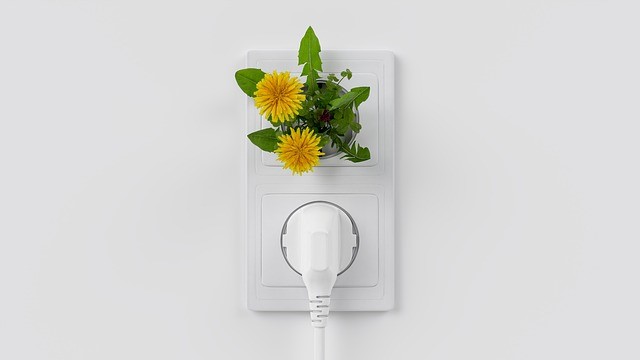
Sustainable Energy Utility (SEU) is a new and innovative type of municipal utility that is legal in Michigan. It would be “a 100% renewably powered, reliable, local, shared, and publicly owned municipal energy utility; built by the community for the community.” It could start very quickly and would not seek to provide all of Ann Arbor’s energy; though it could grow with demand to become much larger over time. Thus, it would be supplementary to (and competitive with) DTE’s energy offerings.
The Ann Arbor Office of Sustainability and Innovation (OSI) has worked with five technical advisors to explore the technical and financial feasibility of an SEU, with very positive results. Working with microgrids, an SEU could offer not only solar electricity but other carbon-reducing possibilities such as district level geothermal (i.e., shared among a number of homes), energy efficiency programs to renters as well as owners and energy justice initiatives. See the detailed proposal at this link: www.a2gov.org/a2seu. Individuals and organizations who want to indicate an interest in possibly connecting with the SEU, if it goes forward, should contact OSI at sustainability@a2gov.org
A vote of the City Council is all that would be required to move ahead with an SEU, depending on how the SEU is funded. It is also an option that would be scalable to other cities since it would not require huge amounts of capital up-front.
The OSI has held one public information session on the SEU possibility and will be holding others. Use this LINK to a recording of that session. (Access Passcode: z5tLp+Si)
A Municipal Utility
Municipalization is the process of a city acquiring ownership and assuming responsibility for the utilization and distribution of their city’s electric utility system. The establishment of a public power utility would allow the community to control its own power and focus on reliability, reasonable prices, and increased renewable energy sources.
Municipal utilities are legal under Michigan law and a significant number are currently operating in Michigan, although none have been incorporated since the early 1900’s. The first step in considering a transition to a public owned utility is a feasibility study to gain a better understanding of the costs and the process involved with such a transition. A local group, Ann Arbor for Public Power is proposing a Municipal utility and has created an information sheet here.
Ann Arbor’s Energy Commission, while exploring the feasibility of a public utility, invited representatives from Boulder, CO and Winter Park, FL to share their experiences with creating or modifying their transition to having more community control over their generation and distribution of electricity in their individual cities. Both communities offered the pros and cons and challenges along the way of establishing a municipal utility. Both are strong advocates for community control which allows for lower rates, better reliability, and the ability to redirect profits back to their communities. Both presentations can be found here: Winter Park / Boulder.
City Council has asked the Energy Commission to make a recommendation on a feasibility study to explore the creation of a public municipal utility by December 31. The concept of municipalization was raised before the SEU proposal was unveiled, so the path forward from here is still emerging.
These two possibilities are not mutually exclusive. Ann Arbor could start with the SEU, which could be up and running far more quickly than a full municipal utility, while continuing down the path for full municipalization. DTE has already pushed back against the idea of the city forming its own utility. It is not clear how it will respond to the idea of an SEU, which would not change DTE directly but would be in competition with it by providing 100% renewable energy, likely at a lower cost, given recent technological advances.
Next Steps for both options will require more opportunities for community input and education of Ann Arbor residents as well as further discernment by the Energy Commission and Council. Both options offer alternative methods for generating and distributing electricity that promise to reduce costs, become greener and more reliable, and allow profits generated to go back into our community.